
From Idea to Screen: Writing Your First Script

Turning Your Vision Into a Cinematic Reality
The step by step journey every aspiring screenwriter needs to know.
Every filmmaker has that one story , the one that keeps tugging at you. Maybe it started as a single image. Maybe it was a “what if” that wouldn’t leave your head. Or maybe it’s just a character you’ve been carrying around for years.
But turning that spark into an actual screenplay? Yeah… that part’s tricky.
The good news? You don’t need a film degree or industry hookups to start. You just need a process , and a bit of grit. Here’s how to go from idea to a finished script that’s actually ready to shoot.
Start With the Spark
Forget formatting for a second. The best scripts start with curiosity.
- What if…?
- What happens when…?
That’s your core idea. Maybe it’s a girl who can pause time, but only when her heart breaks. Or a man who finds a message in his own reflection. Whatever it is, boil it down to one or two sentences ; your logline.
Create Characters Worth Following
Once you have a basic idea, it’s time to focus on who the story is about.
Cool concept? Great. But who’s living through it?
Because no matter how cool your concept is, if the characters aren’t engaging, your audience won’t care.
Start with your protagonist. What do they want? What’s standing in their way? What flaw do they need to overcome?
From there, fill in the world. Give each character a backstory, side characters, best friends, rivals, mentors. They all need purpose. Even if their full backstory never hits the page, you should know it. That depth will show.
Structure First, Dialogue Later
One of the most common mistakes new screenwriters make is starting straight with writing scenes without knowing where they’re headed. This often leads to half finished scripts or messy second acts that lose momentum.
You don’t need to know every beat but know your acts. The three-act structure is a tried and tested foundation:
- Act One: Set the stage. Introduce your world and characters. Throw in the inciting incident that flips everything.
- Act Two: The confrontation phase. Your protagonist faces escalating obstacles, here raise the stakes.
- Act Three: The resolution. They take decisive action, change (or don’t), and whether the story resolves either in triumph or tragedy.
Structure gives you a map. You can always detour, but at least you won’t get lost.
Write a Treatment Before the Script
A treatment is your story in prose form , no dialogue, just flow. You can either think of it like telling your movie to a friend or as a blueprint. It’s your story in prose form , anywhere from one to five pages long.
Writing a treatment helps you spot plot holes early, keeps your pacing in check, and gives you something to share for early feedback before you commit to 90 pages of screenplay. Plus, it’s easier to get feedback on a 3-pager than a full draft.
Now, Open That Script Software
Once your structure feels solid, it’s time to start the actual screenplay. Tools like Final Draft, Celtx, Fade In, or WriterDuet make formatting easy. If you’re on a budget, Arc Studio Pro or Trelby are great free options.
Stick to standard format:
- Scene Headings (INT./EXT.)
- Action lines in present tense
- Character names and dialogue centered
- Minimal parentheticals unless absolutely needed
Keep your writing visual. If it can’t be seen or heard, it doesn’t belong in the script.
The First Draft is Supposed to Be Ugly
Seriously, Don’t stress about making it pretty. Just finish the draft.
First drafts are about getting the story out of your head and onto the page. Don’t get caught up editing as you go. You’ll polish it later. Don’t fix every line of dialogue. Just get it down. Momentum matters more than perfection.
Give yourself deadlines. A short film script should be 5-15 pages. A feature? Aim for 90-120.
Rewrite. Then Rewrite Again.
Once your first draft is done, step away. Then come back with fresh eyes.
Your second draft is where the real writing happens. Look at structure, pacing, and character arcs. Tighten dialogue. Cut scenes that don’t push the story forward.
Checking whether the dialogues feel natural, what needs to stay within the story, etc.
This is also a good time to share the script with a few trusted readers ; people who will give you honest, constructive feedback. Every cut you make is a step closer to something stronger. Don’t defend instead just listen.
Table Reads Reveal Everything
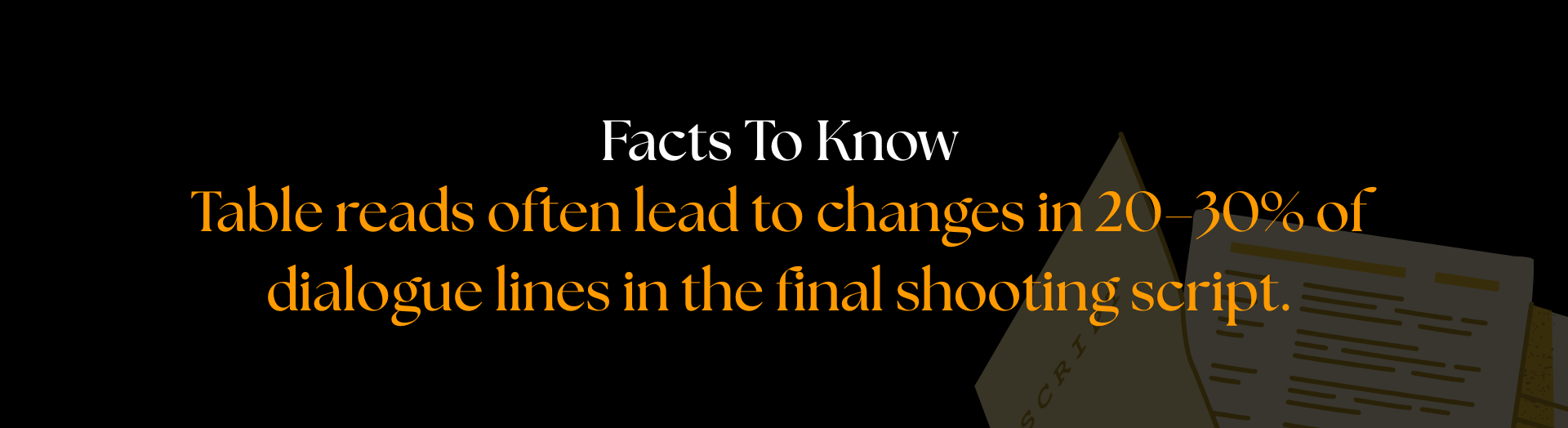
Once you’ve done a few rewrites and things feel solid, gather some friends (or actors, if you’ve got them) and read the whole script out loud.
You’ll be amazed how different your script sounds when spoken. Suddenly, that “clever” line feels clunky. That long monologue drags. A joke that killed in your head might fall flat. And that quiet moment? It might land harder than you expected.
Make notes. Listen more than you explain. And use the read to make final revisions. This is your final polish phase.
Prep the Shooting Script
Once the story’s locked, convert your script into a shooting draft. This means breaking down each scene for production purposes:
- Identify props, locations, costumes, and time of day.
- Highlight emotional beats for actors.
- Be specific with visual actions and transitions.
This version will guide your director, cinematographer, and crew. The more detailed and intentional it is, the smoother things will go when the cameras roll.
From Script to Screen: The Beginning, Not the End
Completing your first script isn’t the finish line ; it’s the starting block.
Now comes the fun part: bringing it to life.
Maybe you’ll direct it yourself. Maybe you’ll team up with a classmate or post it in a local film group. Whatever your path, just start moving. Because that script? It’s not meant to live in a folder forever.
Pick up a camera. Build a team. Plan your shoot.
Final Thoughts
Writing a script from scratch is tough. Yet it is the most rewarding creative process. It takes guts, and requires patience, discipline, and a willingness to rewrite ruthlessly. But if you pull through you will end up with something special- a story only you could tell.
Because in a world overflowing with content, authenticity stands out.